
What are e-AWB, e-CSD and Cargo-XML? The building blocks of paperless air cargo
The electronic air waybill (e-AWB), the electronic consignment security declaration (e-CSD) and Cargo-XML, and how the data is produced at the terminal.
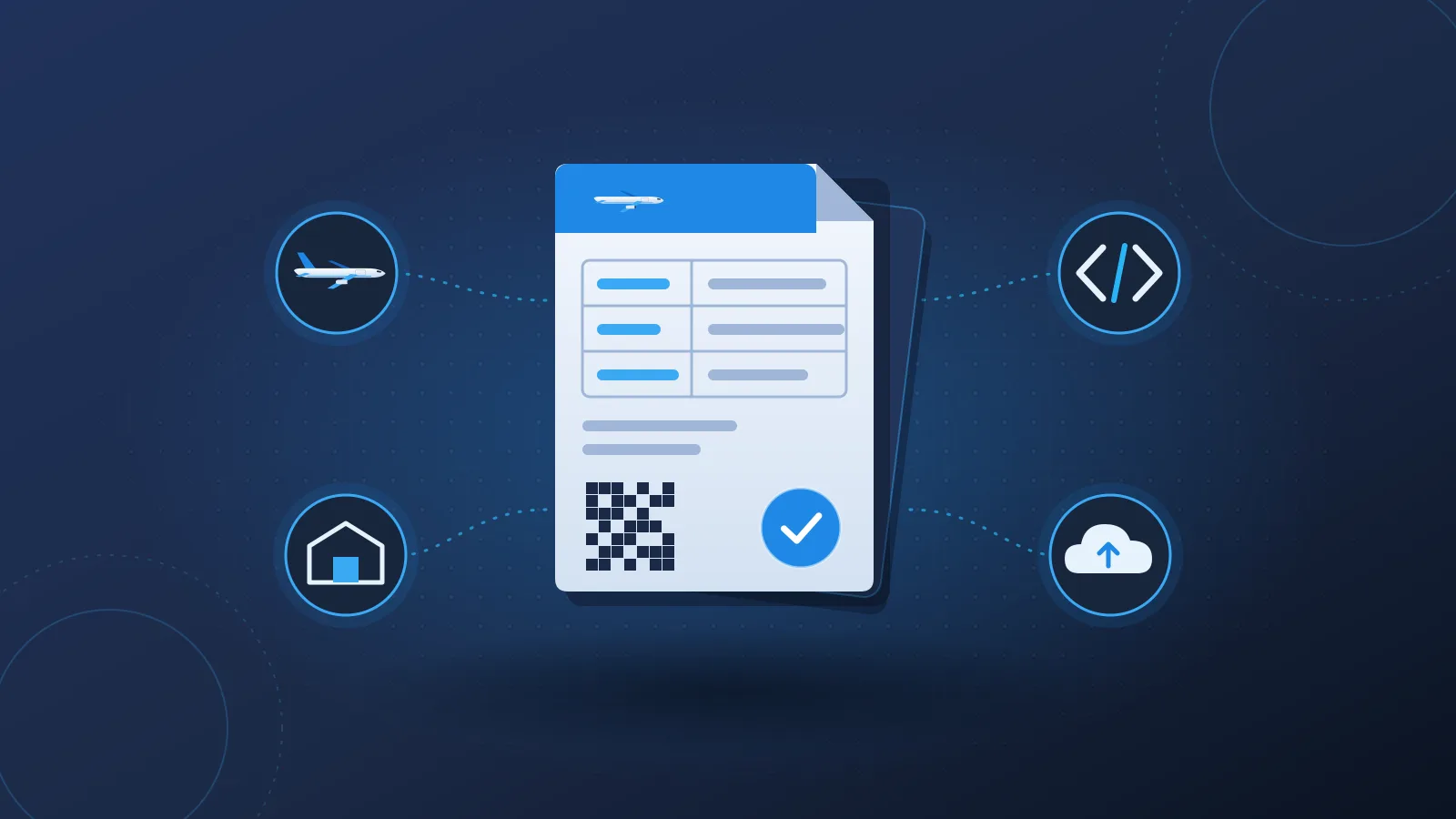
An e-AWB is an air waybill, the document of the air cargo contract of carriage, issued as electronic data instead of paper; an e-CSD is the electronic version of the Consignment Security Declaration, which shows a shipment's security status. Cargo-XML is an XML-based messaging standard used to carry this data between systems. Together they move the air cargo document flow from paper to data.
Why does the air waybill matter?
The air waybill (AWB) documents the contract of carriage between shipper and airline and acts as the shipment's identity. With a paper AWB, the same information is written at the agent, keyed in again at the terminal and processed once more at the airline. Every re-entry carries a risk of delay and typing errors. With an e-AWB, the waybill data is transmitted electronically from the start and all parties' systems work on the same data.
How does an e-AWB work in practice?
With an e-AWB, the contents of the waybill are sent as an electronic message. In air cargo this data is usually carried by the FWB message, and the house waybills of a consolidated shipment by the FHL message. For terminal software, this means the pieces, weight and dimensions captured at acceptance must be consistent with the electronic data, and messages must go out at the right moment.
In carGObis, declarations and waybills are entered at document acceptance with all the information on the AWB, per MAWB and HAWB. When the master AWB entry is complete, an RCS message is sent automatically, and FWB and FHL messages optionally. When MAWB and HAWB entries are complete, the waybill details are emailed to the relevant airline. After scanning the cargo on the handheld terminal, acceptance staff enter dimensions, pieces and weight per MAWB and HAWB; once this is complete, an FSU/FOH message goes out over SITA automatically.
What is an e-CSD and why is it needed?
In air cargo, a shipment can be loaded onto an aircraft only once its security status has been established and documented. The Consignment Security Declaration (CSD) shows the security status of the shipment and the method by which it was screened. An e-CSD is this declaration issued and exchanged electronically.
At the terminal, the source of this process is the x-ray point. In carGObis, staff loading cargo into the x-ray machine scan the label on the handheld terminal before placing the cargo in the machine. The x-ray operator's screen shows the nature of goods, AWB number, piece count and x-ray entry time, and "Clear–Opaque–K9" forms are printed. When needed, the CSD form is filled in automatically by the software and printed. The information in the security declaration therefore comes from the acceptance and x-ray records in the system, not from a hand-filled form.
What does Cargo-XML bring?
For a long time, air cargo messaging ran on text-based messages whose fields were laid out by fixed rules. Cargo-XML is a messaging standard that defines the same business data in an XML structure. Because every field in XML is explicitly named, messages are easier for software to validate and can be extended with new data fields. carGObis is compliant with Cargo-XML and also works with e-AWB and e-CSD.
What to watch on the terminal side
A paperless process is not achieved by scanning documents; it requires data to be produced correctly at its source. Three points therefore stand out in terminal software: complete entry of acceptance data (pieces, weight, dimensions) per MAWB and HAWB, linking x-ray and security records to the shipment, and recording who processed each sent or received message and when. The carGObis SITA integration runs as a service and logs every outgoing and incoming message with the sending host, user, date and time. Whether documents recorded in the system are complete can also be checked on the website.
Summary
The e-AWB makes the air waybill electronic and the e-CSD does the same for the consignment security declaration, while Cargo-XML is the XML-based standard that carries this data between systems. At the terminal, these processes depend on acceptance and x-ray data being captured correctly at source with handheld terminals. With its e-AWB and e-CSD compatibility and Cargo-XML support, carGObis keeps this data in one flow from acceptance to departure.